How Weather Conditions Affect Your Car’s Components Over Time
Posted Friday, Jun 05, 2026
The weather affects every vehicle differently. Understanding how weather conditions affect your car’s components over time helps you plan regular maintenance, avoid costly repairs, and keep your vehicle running safely in hot summers, freezing winters, and during extreme weather. This guide breaks down the impact of extreme weather on common systems, explains warning signs, and offers practical steps to protect your car so it continues to perform well and hold its value.
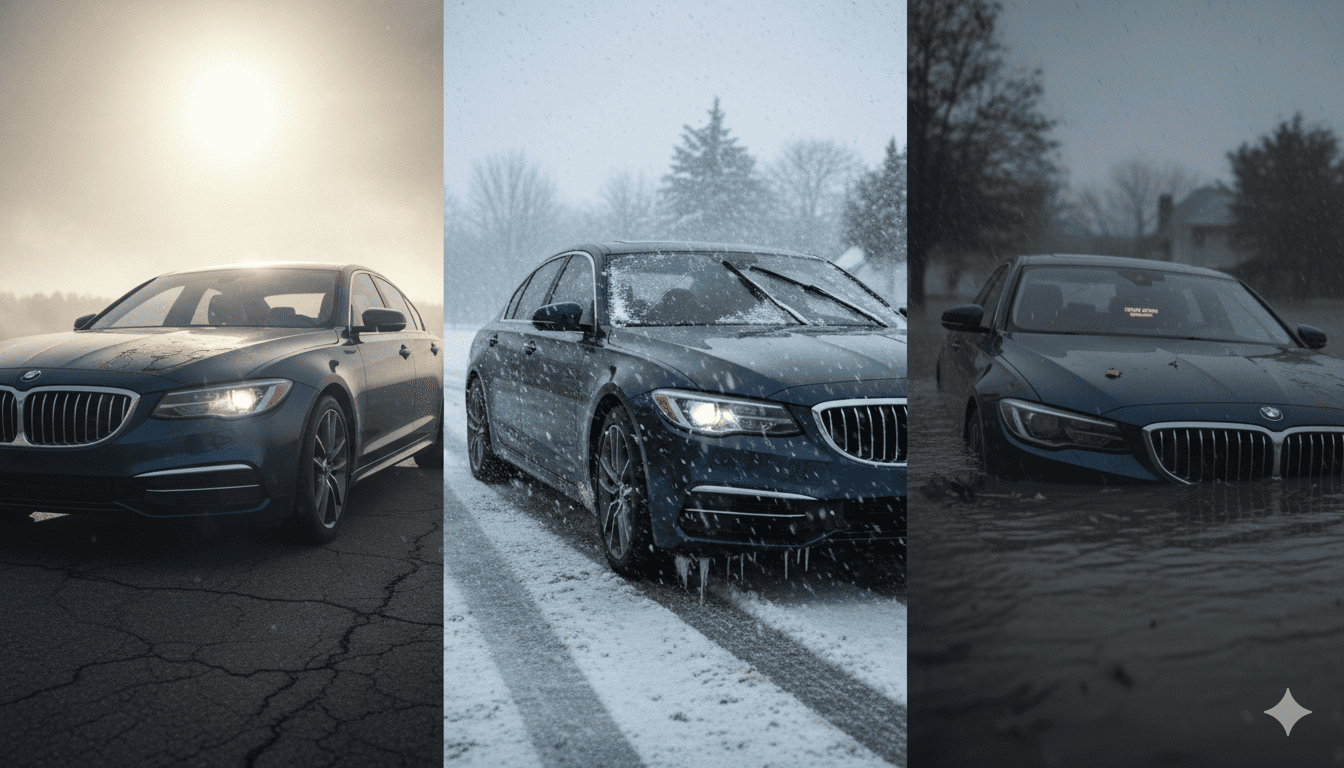
How does extreme heat and hot weather impact your vehicle’s engine and cooling system?
Extreme heat can cause your engine to overheat and place extra stress on the cooling system. High temperatures can cause coolant to evaporate faster and reduce the cooling system’s effectiveness, so checking coolant levels and the radiator is essential. If coolant levels fluctuate or the cooling system works inconsistently, your engine may run hotter and risk head gasket issues or warped components over time.
Regular maintenance helps mitigate heat damage: inspect hoses for cracks, ensure the thermostat and water pump are functioning, and top off coolant to the recommended temp range. A heatwave or prolonged high temperatures can also make your engine run faster and harder, which may lead to decreased fuel efficiency and accelerate wear and tear on internal components.
Can hot weather cause battery fluid to evaporate and affect starting performance?
Yes — high temperatures can cause battery fluid to evaporate, lowering battery capacity and leading to weaker cold-cranking amps over time. Even though batteries often fail in winter, summer heat shortens battery life by accelerating chemical reactions inside the battery and causing internal components to break down. This can lead to unexpected starts failing, and the need for replacement is necessary sooner than expected.
To protect your car battery in hot weather, keep connections clean, ensure secure mounting to limit vibration, and have the battery tested during regular maintenance. If you live in an area with hot summers, consider checking battery health before heatwave seasons to avoid being stranded with a dead battery when extreme temperatures take a toll on performance.
How do cold temperatures and winter roads affect your tires and tire pressure?
Cold temperatures cause air to contract, so tire pressure drops as the temp falls — this fluctuation can increase the risk of a blowout and uneven wear. Proper tire pressure is linked to fuel economy and handling; low tire pressure causes the tire surface to flex more, generating heat and accelerating wear and tear. Regularly check tire pressure, especially with swings between hot and cold weather.
Winter roads add hazards from ice, salt, and potholes that can warp wheels or cause small cracks in tire sidewalls. For safe winter driving, keep a maintenance schedule for tire rotations, check for tread depth, and consider winter tires where freezing temperatures and snow are frequent. Maintaining correct tire pressure helps protect your car and preserve fuel efficiency even in severe weather.
What effect do sun exposure and high temperatures have on your car’s interior and exterior finish?
Sun exposure can cause the clear coat to break down, fade paint, and dry out interior materials like leather and plastic. UV rays and hot weather accelerate oxidation on the surface of your vehicle and can cause dashboards to crack or fade. Over time, sun damage can reduce the vehicle’s resale value and lead to costly repairs like repainting or interior restoration.
To protect your car, park in shade, use windshield sunshades, and apply high-quality wax or ceramic coatings that shield paint from UV damage. Regular cleaning and conditioning of interior surfaces will prevent materials from hardening and thicken protective layers, helping to keep your car looking newer and avoiding expensive repairs caused by prolonged sun exposure.
How do extreme weather conditions like heavy rainfall and flooding impact your car’s internal components?
Heavy rainfall and flooding can cause serious, often hidden, damage to internal components such as the electrical system, transmission fluid, and engine air intake. Water intrusion can cause short circuits, corrode connections, and contaminate fluids, leading to expensive repairs down the line. Weather-related flooding often results in vehicles that require extensive inspection and replacement of affected parts.
After driving through deep water or heavy rainfall, have your vehicle checked for water in the interior, unusual smells, or electrical issues. If water reaches the engine or transmission, towing to a mechanic for professional assessment is recommended. Protect your car by avoiding flooded roads and keeping an eye on weather forecasts to prevent exposure to extreme weather conditions that can take a toll on your vehicle.
How does hot and cold weather affect fuel efficiency and fuel system components?
Both hot and cold temperatures can impact fuel efficiency. Hot weather can increase evaporation rates, while cold starts in winter reduce fuel economy until the engine reaches optimal operating temperature. Fuel systems can suffer when temperature swings cause condensation or when fuel evaporates more quickly in high temperatures, which may affect fuel economy and the overall performance of the engine.
Regular maintenance, including fuel filter and injector cleaning, helps maintain good fuel efficiency. Monitoring fuel efficiency trends can alert you to issues: a sudden decrease in fuel economy during extreme temperatures may indicate a problem caused by weather effects on your fuel system or air intake components.
Can extreme temperature swings warp brakes, rotors, or other braking system parts?
Yes — repeated heating and cooling cycles can warp rotors and accelerate wear on brake pads and hardware. Heavy braking in hot weather or driving through cold water after a hot drive can cause thermal shock, leading to rotor warping or scoring. These issues can cause vibrations, reduced braking performance, and the need for replacement is necessary sooner than under moderate conditions.
To protect braking components, practice proper braking habits, avoid sudden high-speed braking when possible, and schedule brake inspections as part of regular maintenance. If you feel pulsing or vibration under braking, have the rotors checked promptly to prevent further damage and costly repairs.
How do hot summers and winter freezes affect transmission fluid and drivetrain components?
High temperatures can thin transmission fluid, reducing its lubricating properties, while freezing temperatures can thicken fluid, making the transmission work harder during cold starts. In extreme heat, the cooling system for the transmission may be overtaxed, leading to overheating and premature wear. Conversely, cold-cranking in winter places extra stress on transmission and drivetrain components until temperatures normalize.
Regularly check transmission fluid levels and condition — melted or contaminated fluid can signal problems. Ensuring that the transmission cooling system and fluid are in good condition helps protect the drivetrain from the impact of extreme temperatures and prevents expensive repairs associated with overheating or fluid degradation.
How does weather-related wear and tear affect windshields, glass, and small cracks over time?
Temperature swings and debris from extreme weather can turn small chips into large cracks. Hot and cold cycles cause glass to expand and contract — the air expands in hot weather and contracts in cold temperatures — which stresses existing imperfections and leads to spreading. Debris from storms or heavy rain can damage the windshield and lead to cracks or chips that may require early replacement if not addressed promptly.
Address small chips immediately with repair kits or professional services to prevent them from growing. Using windshield sun protection and maintaining proper wiper blades reduces the risk of scratches and damage. Regular inspections after severe weather can help catch small problems before they require costly full glass replacement.
What maintenance steps can you take to protect your car and reduce the impact of extreme weather?
Regular maintenance is your best defense against the toll that weather takes on your vehicle. Key steps include checking coolant levels, monitoring tire pressure, changing fluids per manufacturer recommendations, and inspecting belts and hoses for cracks from sun exposure. Consistent attention prevents small weather-related issues from growing into expensive repairs.
Other protective actions: park in covered areas during summer heat or snow, use floor mats and seat covers to protect interiors, and wash off salt after winter drives. Create a seasonal checklist to ensure you keep your car in top condition through summer heat and freezing temperatures, reducing the big impact extreme weather conditions can have on components over time.
How do severe weather events influence long-term reliability and potential damage to used cars?
Severe weather can mask long-term problems in used cars. Flood-damaged vehicles may appear fine initially but develop electrical failures, corrosion, and costly repairs later. Sun exposure and summer heat can hide fading and interior degradation that affect resale value. When buying a used car, it’s important to consider whether the vehicle has been exposed to extreme weather conditions and to have a full inspection done.
If you’re searching for the right used car, ask for service records showing regular maintenance, look for signs of weather-related repairs, and request a vehicle history report. A thorough pre-purchase inspection will identify potential damage from weather effects and help you avoid buying a vehicle with hidden issues that could take a toll on your wallet.
Summary: Key takeaways to protect your car from weather-related damage
- Check coolant levels and cooling systems regularly to prevent overheating in extreme heat.
- Monitor tire pressure with temperature swings to reduce blowout risk and maintain fuel efficiency.
- Protect the battery from heat-induced fluid evaporation and test it before hot summers.
- Park in shade and use sun protection to prevent clear coat, paint, and interior damage.
- Avoid driving through floodwaters; water can contaminate fluids and cause expensive repairs.
- Repair small windshield chips promptly to prevent cracking from temperature changes.
- Keep up with regular maintenance to minimize the toll on your vehicle from hot and cold extremes.
- When buying a used car, inspect for weather-related wear and request a full mechanical check.
Weather affects every aspect of a vehicle, and understanding how weather conditions affect components over time helps you protect your car and reduce costly repairs. If you’re in the market for a reliable used vehicle, consider trusted dealerships such as William H Wessels Used Cars, a Used Car Dealer in Dillsburg, PA, who can help you find the right used car. They can provide guidance on how weather affects vehicles, identify potential damage from extreme conditions, and recommend steps to protect your car while ensuring you choose a vehicle that has handled weather‑related stress well. Prioritize inspections, maintenance records, and a test drive to make sure your purchase stands up to both hot summers and freezing temperatures.